
Trouver l'inspiration dans la nature
Illustration d'après la nature: croquis et peinture avec le lichen comme référence
Dans cet article, je parlerai un peu de l'homme Lichen. Cette pièce s’est avérée être une de mes préférées en 2022, malgré les difficultés techniques et personnelles auxquelles elle m’a obligé à faire face.
Dans cet article, je parlerai un peu de l'homme Lichen. Cette pièce s’est avérée être une de mes préférées en 2022, malgré les difficultés techniques et personnelles auxquelles elle m’a obligé à faire face.
Q: Était-ce une illustration planifiée?
R: Pas du tout. C’était un projet personnel et je ne suivais aucun texte ni orientation. Cette pièce en particulier a dû attendre plus d’un an entre sa première esquisse et son achèvement. Le croquis lui-même n'a pas été planifié ou étudié sous forme de thumbnail, c'était juste quelque chose qui apparaissait sur la page. Et vous remarquerez peut-être que mon croquis ici est exactement cela: un croquis. Des lignes désordonnées, pas de finitions, pas de définition ombres lumières.
C'était une situation très différente de ces autres illustrations, qui étaient une collaboration pour laquelle je devais suivre un texte et faire approuver les croquis.
Q: Allez-vous d'un croquis directement à la pièce finale ?
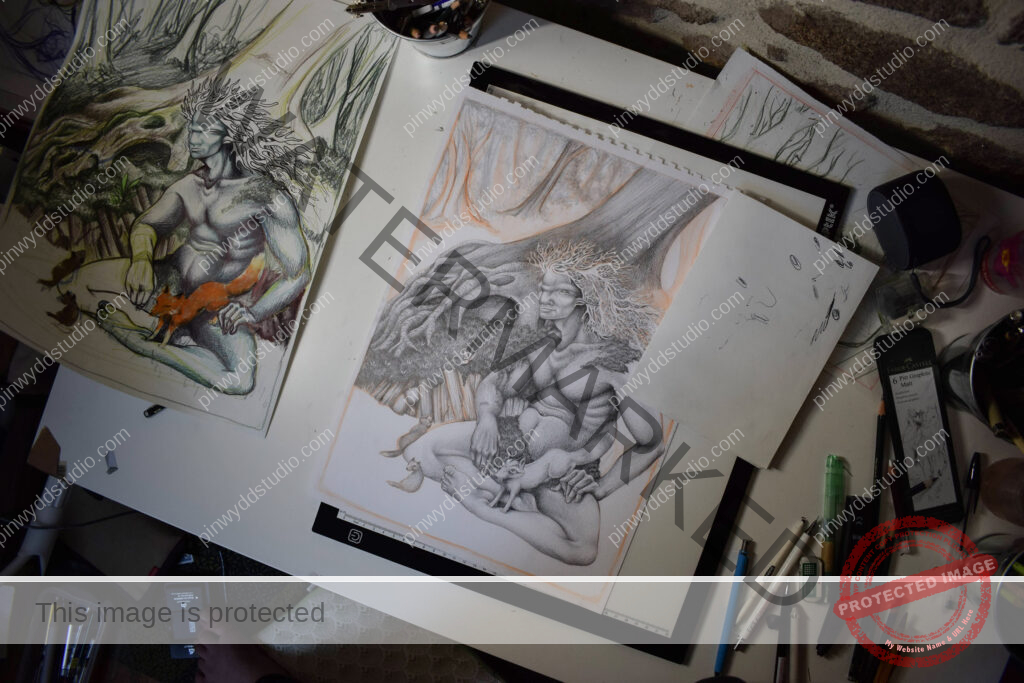
R: Cela dépend. Dans ce cas, il m'a fallu quatre autres études avant d'arriver à quelque chose que je pensais pouvoir transférer dans un papier final. Chaque étude a corrigé certains détails qui ne me plaisaient pas dans les précédentes. J'utilise une table lumineuse pour le faire, afin de pouvoir retracer les parties qui me satisfont et ensuite dessiner le reste d'une manière différente.
J'ai réparé sa position assise, ce qui a pris du temps. Je n’avais pas besoin que ce soit anatomiquement précis, mais je voulais quelque chose qui ressemble à de vraies jambes et qui fonctionnait avec la composition.
Pour le fond, j’ai utilisé comme référence une photo que j’avais pris dans les bois et j’ai fait quelques croquis de renards pour bien représenter l’animal, mais je n’ai pas non plus pris la peine de le rendre trop proche de la réalité.
Ce n'est qu'à la dernière étape que j'ai ajouté des détails plus complexes, comme les cheveux en lichen.

Q: Comment avez-vous choisi la technique pour la version finale?
R: Je n’ai pas exactement choisi, j’ai plutôt fait une erreur. J'ai toujours pensé à l'avoir en couleur, mais j'avais l'intention de fixer les valeurs avec du graphite puis de le colorier avec de l'aquarelle (si vous vous demandez comment cela fonctionne, regardez cette vidéo de smoothy77), ou sur Photoshop.
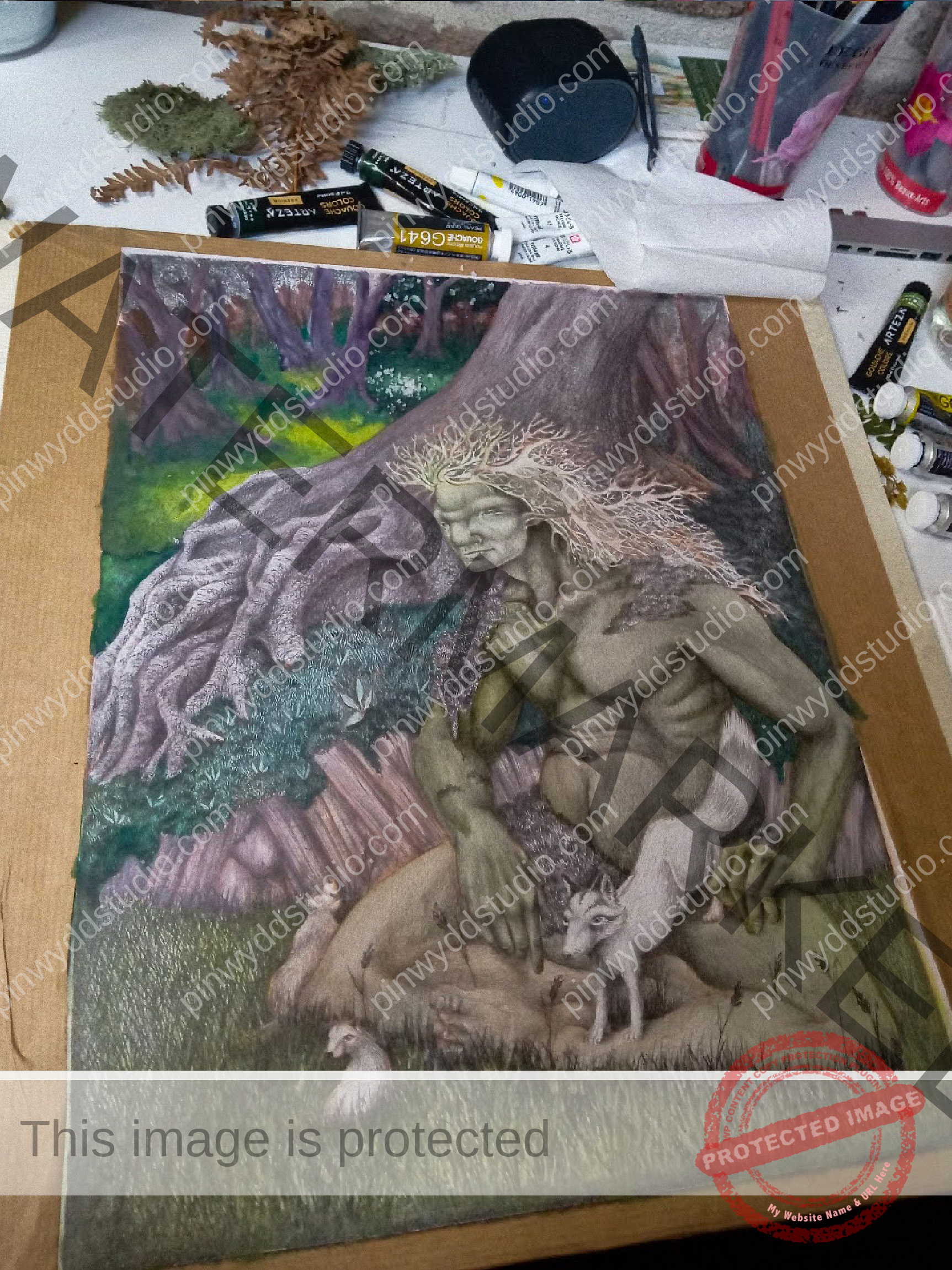
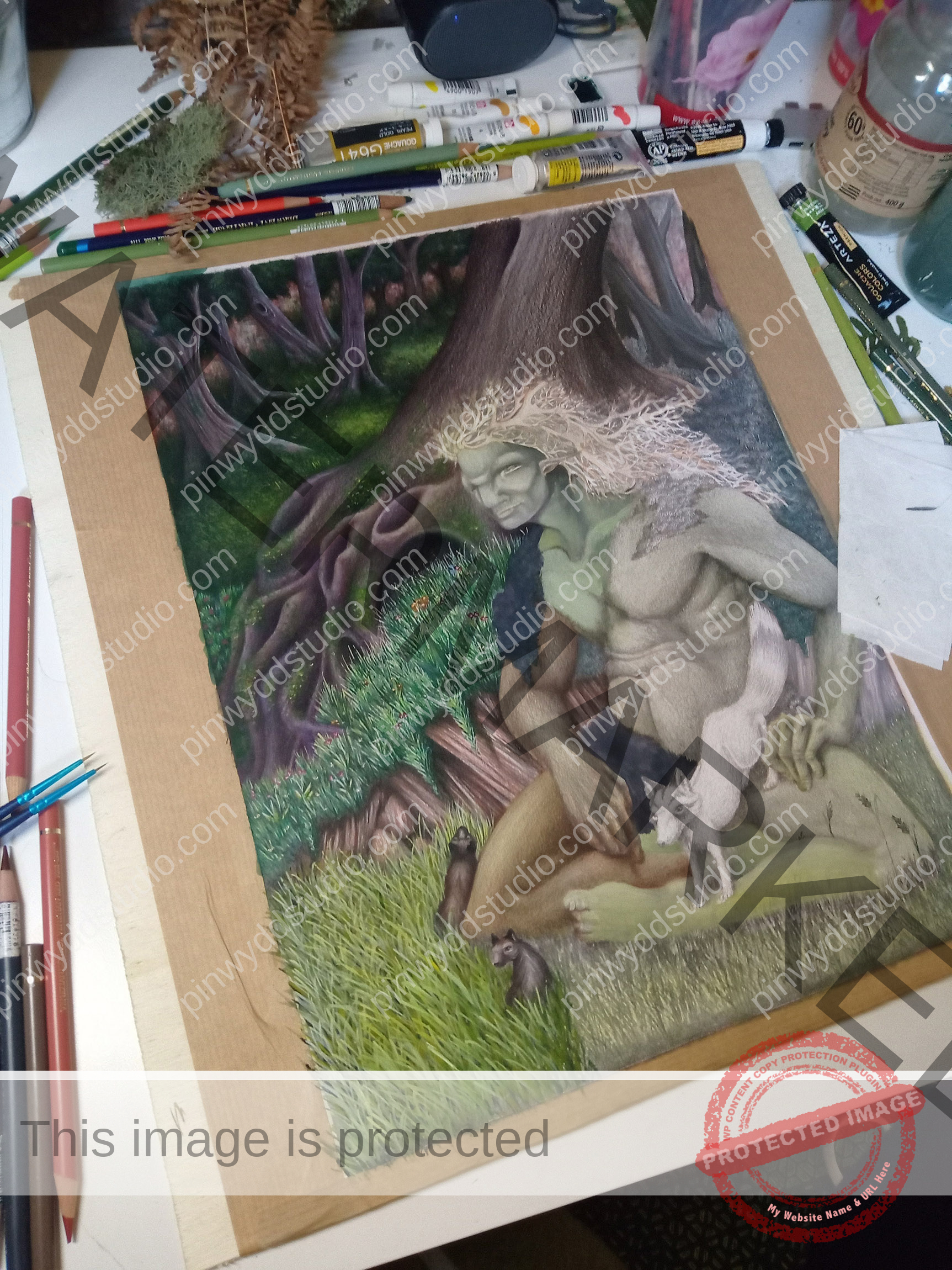
Et puis j’ai utilisé le mauvais crayon pour faire le transfert – un crayon à base de cire au lieu d’un crayon aquarelle – ce qui a donné des lignes oranges qui ne disparaissaient pas. Tant pis. Au final, j’ai dû utiliser de la gouache pour le recouvrir, et c’est comme ça que ça a fini par être une peinture à la gouache.
Pour être honnête, je suis beaucoup plus à l’aise avec les techniques sèches et je préfère fixer les valeurs, les volumes et les textures avec des crayons graphite ou des crayons de couleur, puis utiliser des lavis pour faire ressortir la couleur.
Q: Qu’avez-vous ressenti en réalisant que vous deviez repeindre?
R : Eh bien, c'est comme ça que ça se passe quand vous avez fait plusieurs heures de travail et que vous réalisez ensuite que l'étape suivante va tout effacer (je veux dire, pas vraiment, mais j'en parlerai dans un prochain article) . Cela ne fait pas du bien, mais à ce stade, vous pouvez soit abandonner la pièce et recommencer (ce que j'ai fait plusieurs fois auparavant), soit continuer et terminer quand même parce que vous pensez que le résultat final en vaudra la peine.
Q: Était-ce une illustration planifiée?
R: Pas du tout. C’était un projet personnel et je ne suivais aucun texte ni orientation. Cette pièce en particulier a dû attendre plus d’un an entre sa première esquisse et son achèvement. Le croquis lui-même n'a pas été planifié ou étudié sous forme de thumbnail, c'était juste quelque chose qui apparaissait sur la page. Et vous remarquerez peut-être que mon croquis ici est exactement cela: un croquis. Des lignes désordonnées, pas de finitions, pas de définition ombres lumières.
C'était une situation très différente de ces autres illustrations, qui étaient une collaboration pour laquelle je devais suivre un texte et faire approuver les croquis.
Q: Allez-vous d'un croquis directement à la pièce finale ?
R: Cela dépend. Dans ce cas, il m'a fallu quatre autres études avant d'arriver à quelque chose que je pensais pouvoir transférer dans un papier final. Chaque étude a corrigé certains détails qui ne me plaisaient pas dans les précédentes. J'utilise une table lumineuse pour le faire, afin de pouvoir retracer les parties qui me satisfont et ensuite dessiner le reste d'une manière différente.
J'ai réparé sa position assise, ce qui a pris du temps. Je n’avais pas besoin que ce soit anatomiquement précis, mais je voulais quelque chose qui ressemble à de vraies jambes et qui fonctionnait avec la composition.
Pour le fond, j’ai utilisé comme référence une photo que j’avais pris dans les bois et j’ai fait quelques croquis de renards pour bien représenter l’animal, mais je n’ai pas non plus pris la peine de le rendre trop proche de la réalité.
Ce n'est qu'à la dernière étape que j'ai ajouté des détails plus complexes, comme les cheveux en lichen.
Q: Comment avez-vous choisi la technique pour la version finale?
R: Je n’ai pas exactement choisi, j’ai plutôt fait une erreur. J'ai toujours pensé à l'avoir en couleur, mais j'avais l'intention de fixer les valeurs avec du graphite puis de le colorier avec de l'aquarelle (si vous vous demandez comment cela fonctionne, regardez cette vidéo de smoothy77), ou sur Photoshop.
Et puis j’ai utilisé le mauvais crayon pour faire le transfert – un crayon à base de cire au lieu d’un crayon aquarelle – ce qui a donné des lignes oranges qui ne disparaissaient pas. Tant pis. Au final, j’ai dû utiliser de la gouache pour le recouvrir, et c’est comme ça que ça a fini par être une peinture à la gouache.
Pour être honnête, je suis beaucoup plus à l’aise avec les techniques sèches et je préfère fixer les valeurs, les volumes et les textures avec des crayons graphite ou des crayons de couleur, puis utiliser des lavis pour faire ressortir la couleur.
Q: Qu’avez-vous ressenti en réalisant que vous deviez repeindre?
R : Eh bien, c'est comme ça que ça se passe quand vous avez fait plusieurs heures de travail et que vous réalisez ensuite que l'étape suivante va tout effacer (je veux dire, pas vraiment, mais j'en parlerai dans un prochain article) . Cela ne fait pas du bien, mais à ce stade, vous pouvez soit abandonner la pièce et recommencer (ce que j'ai fait plusieurs fois auparavant), soit continuer et terminer quand même parce que vous pensez que le résultat final en vaudra la peine.


Q: Quels défis avez-vous surmontés dans cette pièce ?
R : Elle m’a aidé à surmonter un perfectionnisme inutile. Pour moi, c'est comme un piège dans lequel je peux tomber lorsque j'accorde trop d'attention aux détails. J’adore l’illustration botanique et scientifique, mais je ne suis ni botaniste ni scientifique. Lorsque je commence à plonger dans ce trou, en essayant d'obtenir des détails précis sur les éléments naturels, cela peut prendre des heures de mon temps créatif et me laisser frustrée.
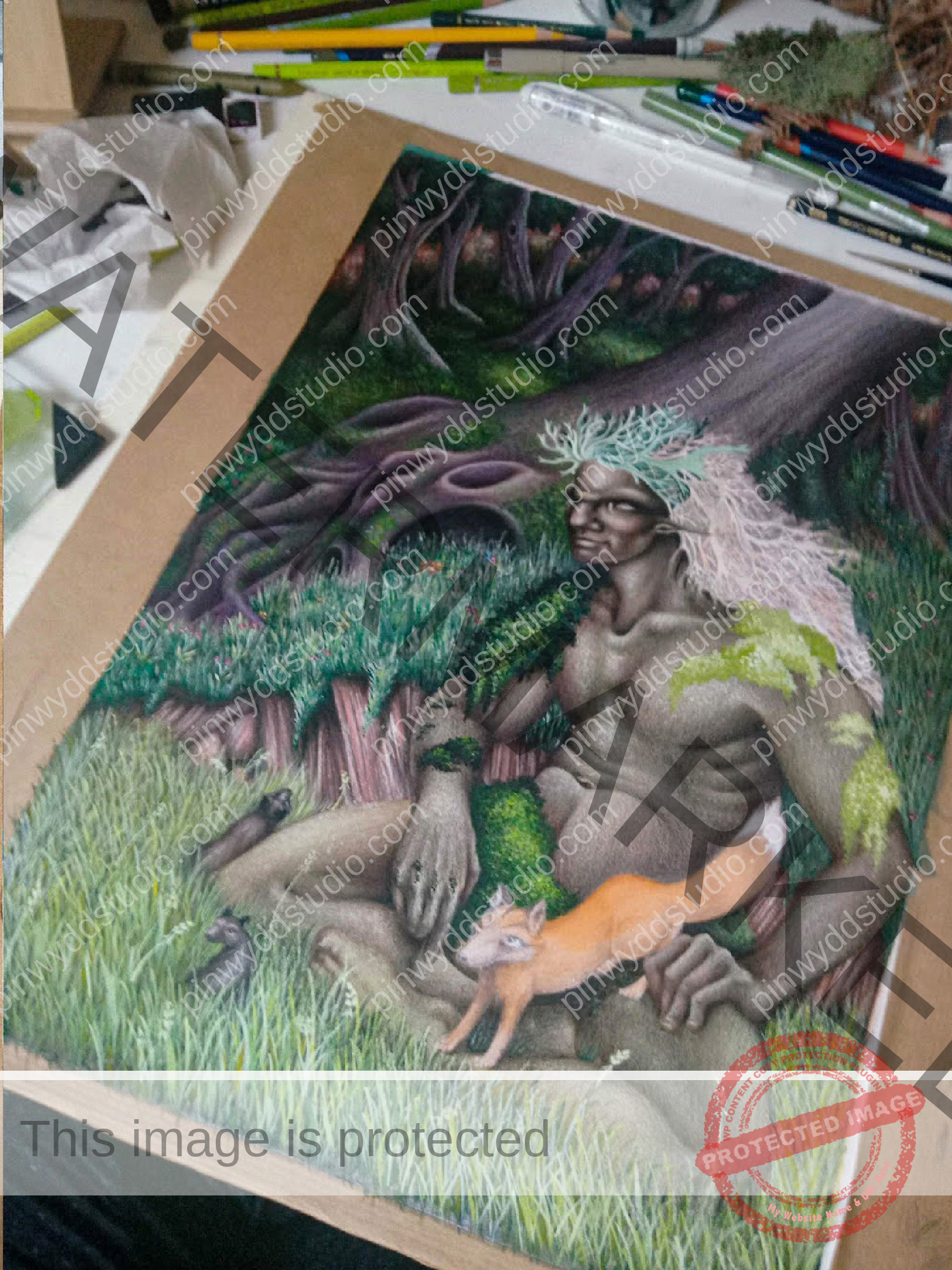
C’est au cours de cette pièce que j’ai décidé que mes plantes et mes animaux ne devaient pas nécessairement ressembler à des plantes et à des animaux que on voit au vrais. Ou au moins pas exactement. Ils pourraient rappeler au spectateur quelque chose qu’il a déjà vu, comme un renard. Mais j’essaie d’être plus libre dans mes décisions et de ne pas trop m’attacher à ce que devrait être un vrai renard. Cela a certainement rendu le processus beaucoup plus amusant.
Q: Quels défis avez-vous surmontés dans cette pièce ?
R : Elle m’a aidé à surmonter un perfectionnisme inutile. Pour moi, c'est comme un piège dans lequel je peux tomber lorsque j'accorde trop d'attention aux détails. J’adore l’illustration botanique et scientifique, mais je ne suis ni botaniste ni scientifique. Lorsque je commence à plonger dans ce trou, en essayant d'obtenir des détails précis sur les éléments naturels, cela peut prendre des heures de mon temps créatif et me laisser frustrée.
C’est au cours de cette pièce que j’ai décidé que mes plantes et mes animaux ne devaient pas nécessairement ressembler à des plantes et à des animaux que on voit au vrais. Ou au moins pas exactement. Ils pourraient rappeler au spectateur quelque chose qu’il a déjà vu, comme un renard. Mais j’essaie d’être plus libre dans mes décisions et de ne pas trop m’attacher à ce que devrait être un vrai renard. Cela a certainement rendu le processus beaucoup plus amusant.
Des questions, suggestions, propositions? Envoiez-nous un message!
Erreur : Formulaire de contact non trouvé !